
Volvo pulled the cover off its newest electric SUV, the EX60, at a global launch event in Stockholm, Sweden, further cementing the brand’s commitment to stay on the EV train long-term.
The EX60 marks what looks like a clean break from its combustion engine legacy, even though it plans to keep on making XC60 plug-in hybrids for the foreseeable future because of how well that model continues to sell.
That today’s cars are basically roving, connected devices isn’t revelatory; it’s that Volvo’s strategy intends to make this mid-size SUV scalable and modular — to a degree — building on its all-electric promise through a whole new tech platform. In short, that means better efficiency, charging speed, range, and vehicle architecture.
But it also means getting even closer to Google and making Gemini a major part of the in-car experience for drivers and passengers — including for those who already own a Volvo EV.
New hardware and software form a Volvo backbone
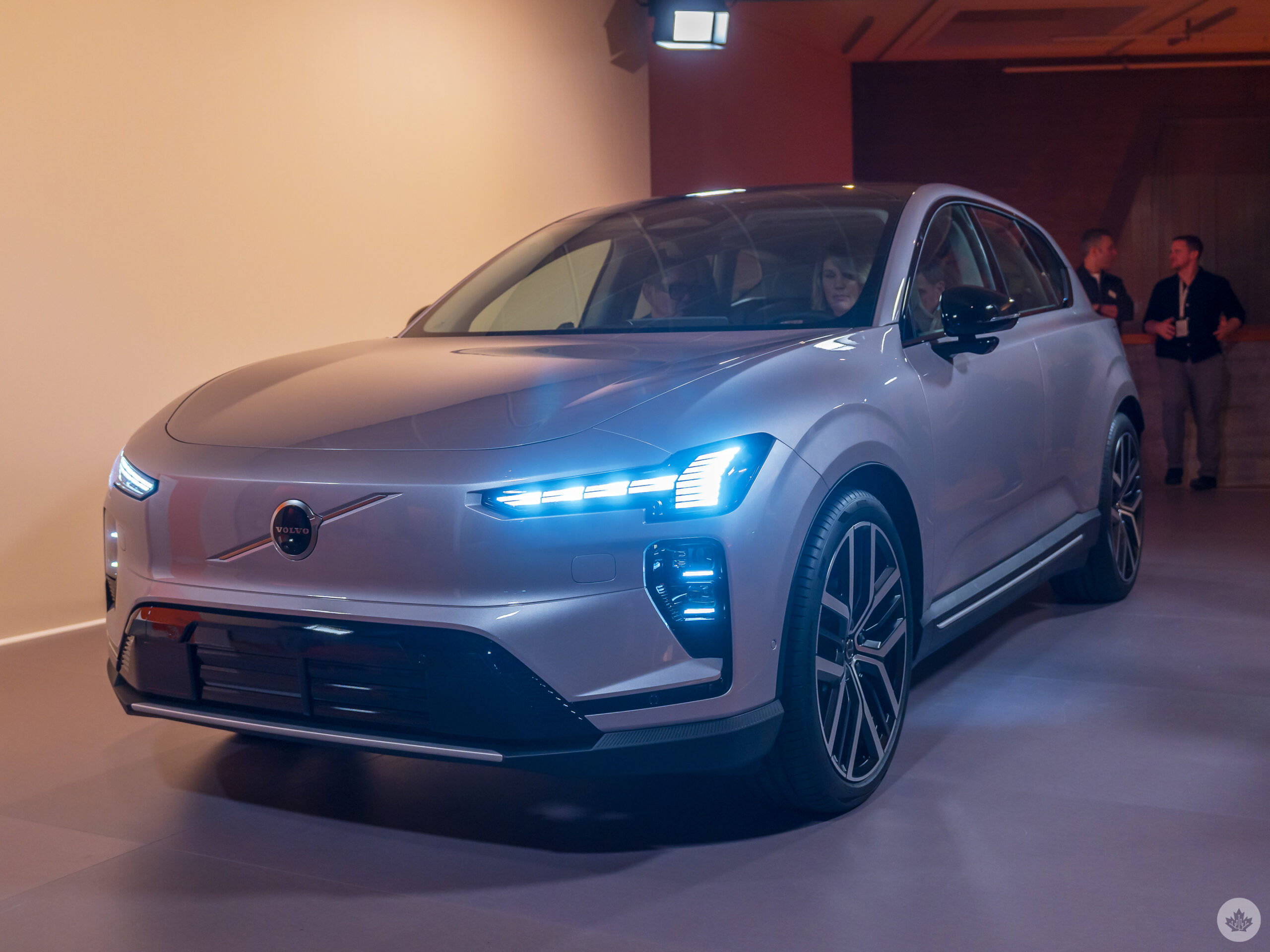
While other automakers have been pulling back their EV rollouts, Volvo isn’t shaking any of that off based on the company’s posture at its launch event. The EX60 will be the first mid-size SUV built on the company’s SPA3 EV architecture, pairing with its core computing system called HuginCore. The idea is for these two components to introduce “unprecedented levels” of flexibility and scalability.
In other words, SPA3 is supposed to be good enough for what’s yet to come. Volvo says it built every part of the architecture, be it cell-to-battery integration, electric motors, and electronics, to support future models and technologies. This way, when new firmware or software updates are available in the coming years, they could roll right back to the EX60 even though it’s not the latest model.
The gist in making this possible is that HuginCore is the centrepiece because it acts as the one software stack that handles it all. Whether it’s the EX60, EX90, or future models, engineers release code into one unified system, ensuring a broader lineup gets some key upgrades.
To wit, Volvo will abandon the old practice of spinning multiple body styles off a platform over 10 years with minimal upgrades. Instead, hardware and software will move together. The EX60’s 800-volt electrical system, shared battery management software, and core compute architecture are planned to roll out across other models. When Qualcomm Snapdragon upgrades arrive, they go out to all the compatible vehicles in the lineup, not just one at a time.
The way Volvo describes it feels a little more akin to how a phone brand releases an OS or software update for multiple devices at once.
Design, performance, range and charging
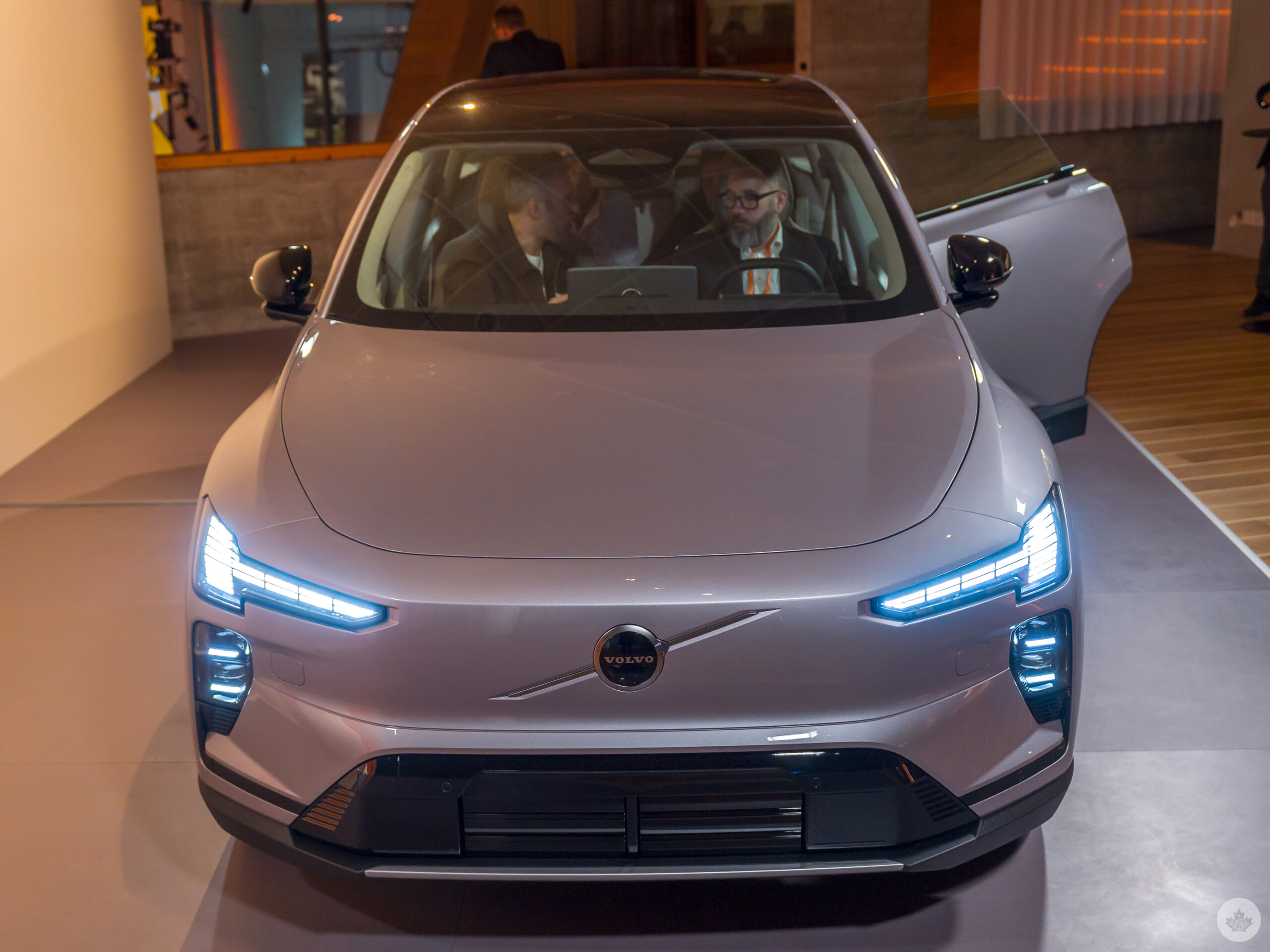
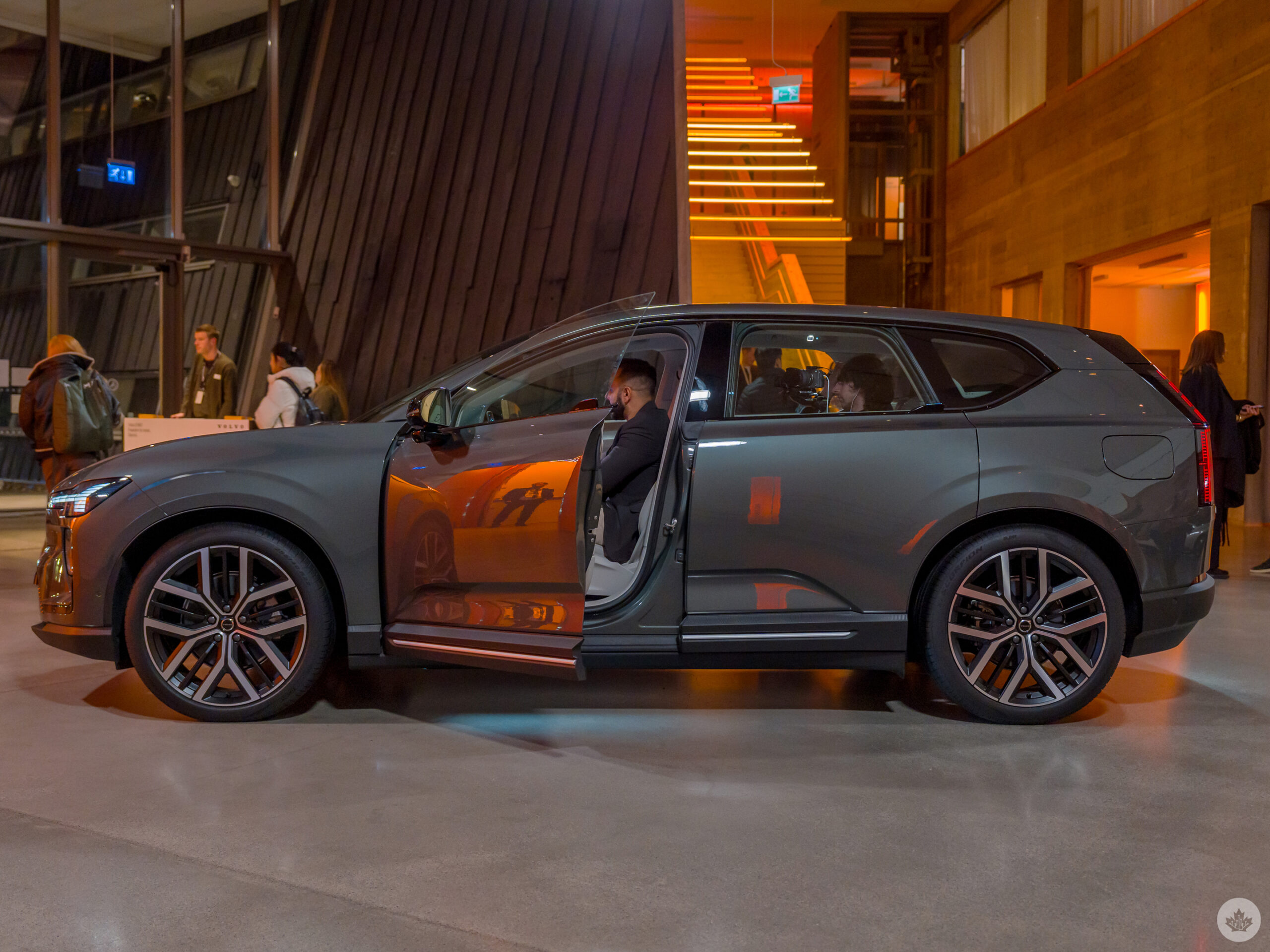
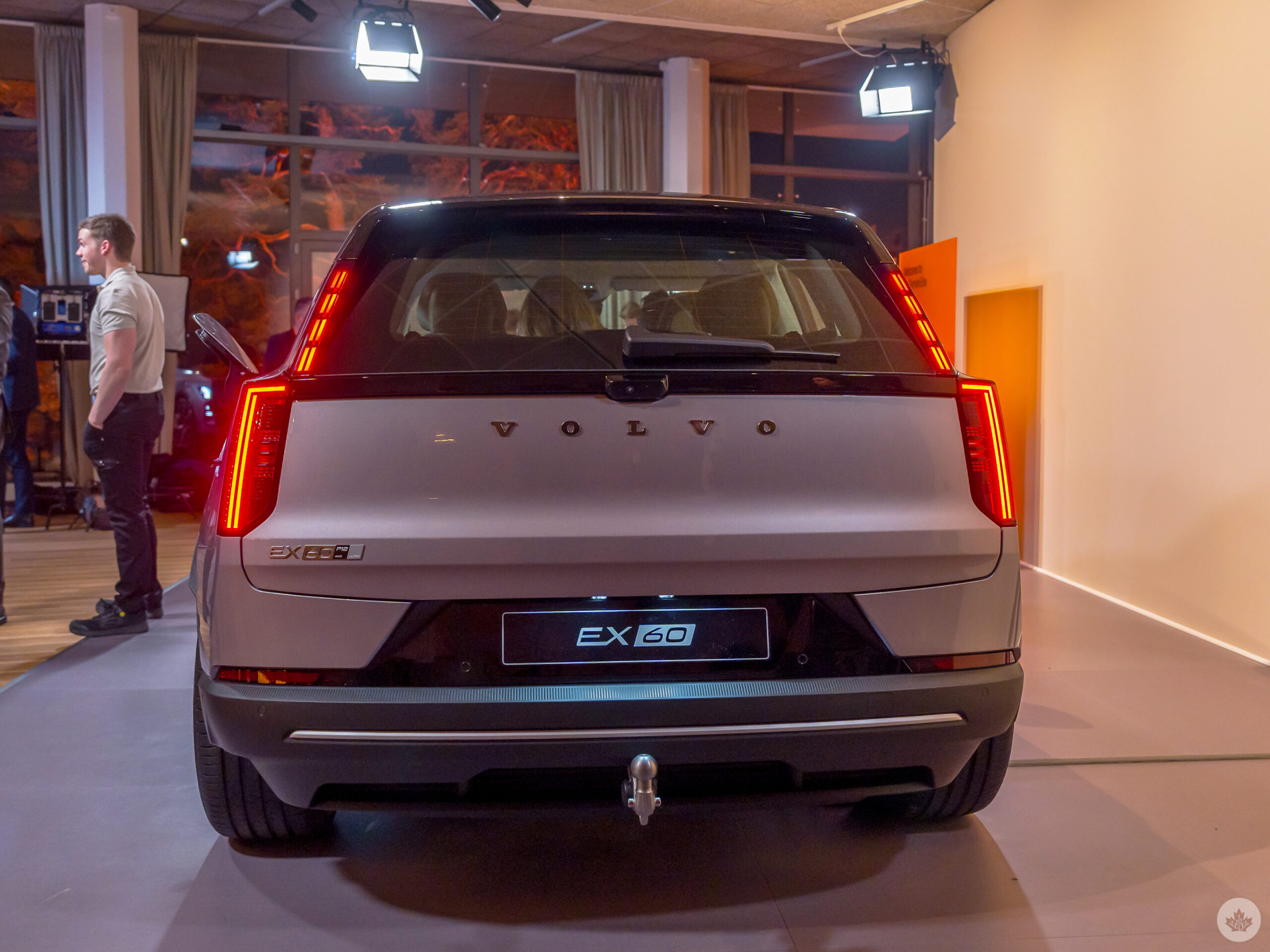
Just looking at the EX60 all but confirms it came from a workshop in Sweden. It has a low front with a sloping roofline and tapered sides that evoke a similar aesthetic to what we’ve seen from its current crop of EV SUVs. In driving terms, that means a 0.26 drag coefficient to help with efficiency and range.
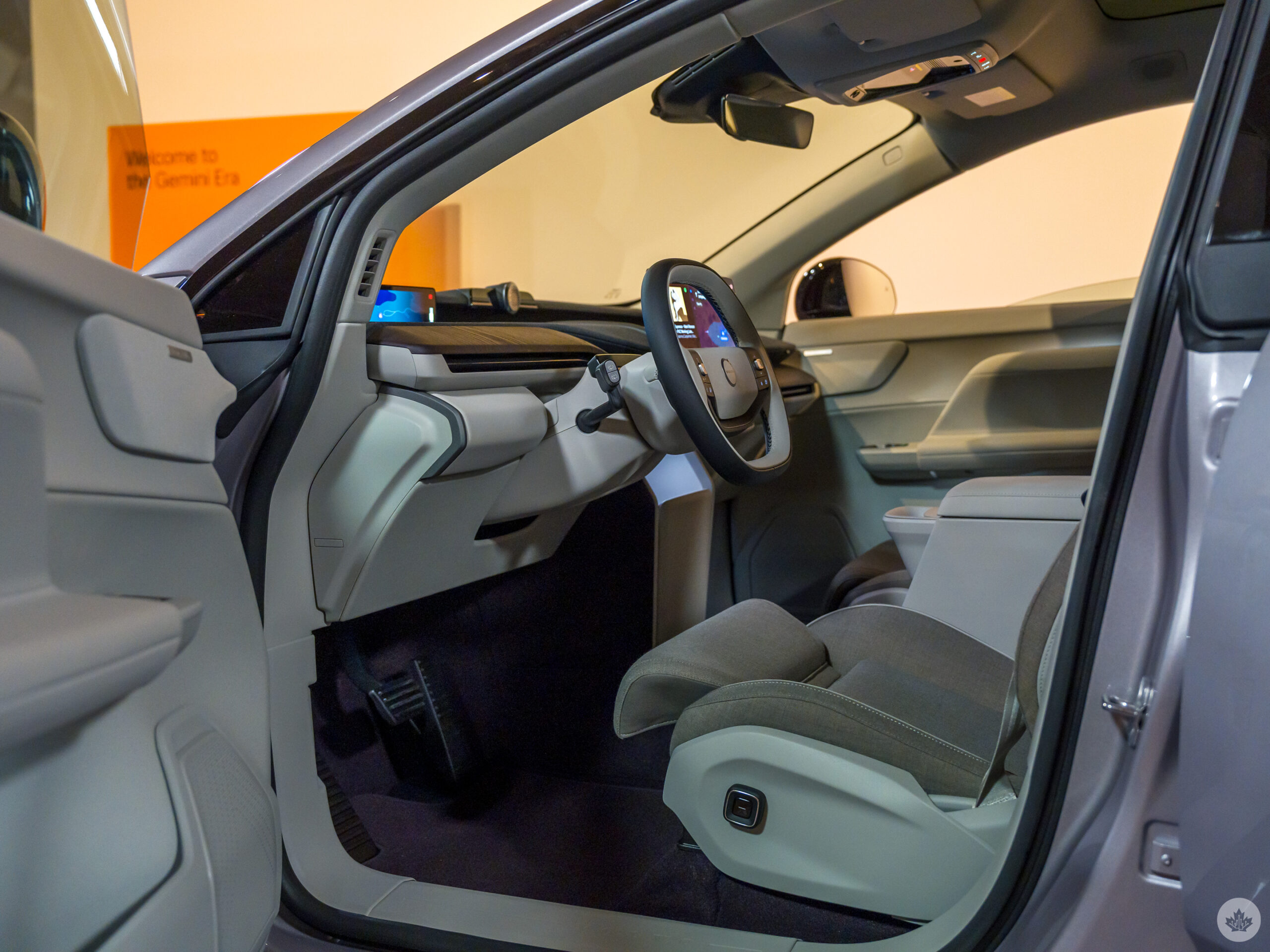
The interior is nice and shows that a flatter floor can do wonders for rear legroom and cargo space. This was a problem in the EX90, which saw a tighter seating situation in the back row because of an elevated gap that partially covered the rear motor and ventilation shaft. That’s not an issue here because there’s no third row, but the long wheelbase and flat foundation can also pay dividends for cargo space and storage inside.
On the road in all-wheel drive, Volvo estimates the EX60 can go up to 640km, further than any all-electric Volvo to date. Not to mention longer than a lot of combustion engine vehicles currently available. Fast charging capability allows the vehicle to add up to 270km of range in just 10 minutes on a 400kW charger. Those numbers change under varying conditions, like cold or hot weather, heating/air conditioning usage and charging speed. It’s great to have 400kW capacity, but finding one that gets close to that is still the hard part in Canada.
Future over-the-air updates will introduce advanced driver assistance (ADAS) capabilities, including Navi Pilot Assist, a “ramp-to-ramp” system meant for highway driving with lane management and overtaking support. While not a fully self-driving system like GM’s Super Cruise or Ford’s Blue Cruise, it’s still being designed to deliver Level 2+ functionality.
Volvo will release two powertrain variants in Canada, with the P12 AWD as the top-end model with maximum range, and the P10 AWD providing a more accessible alternative — so, up to 514km range. Either variant is good for Volvo’s 10-year battery warranty.
A big screen and new digital cluster
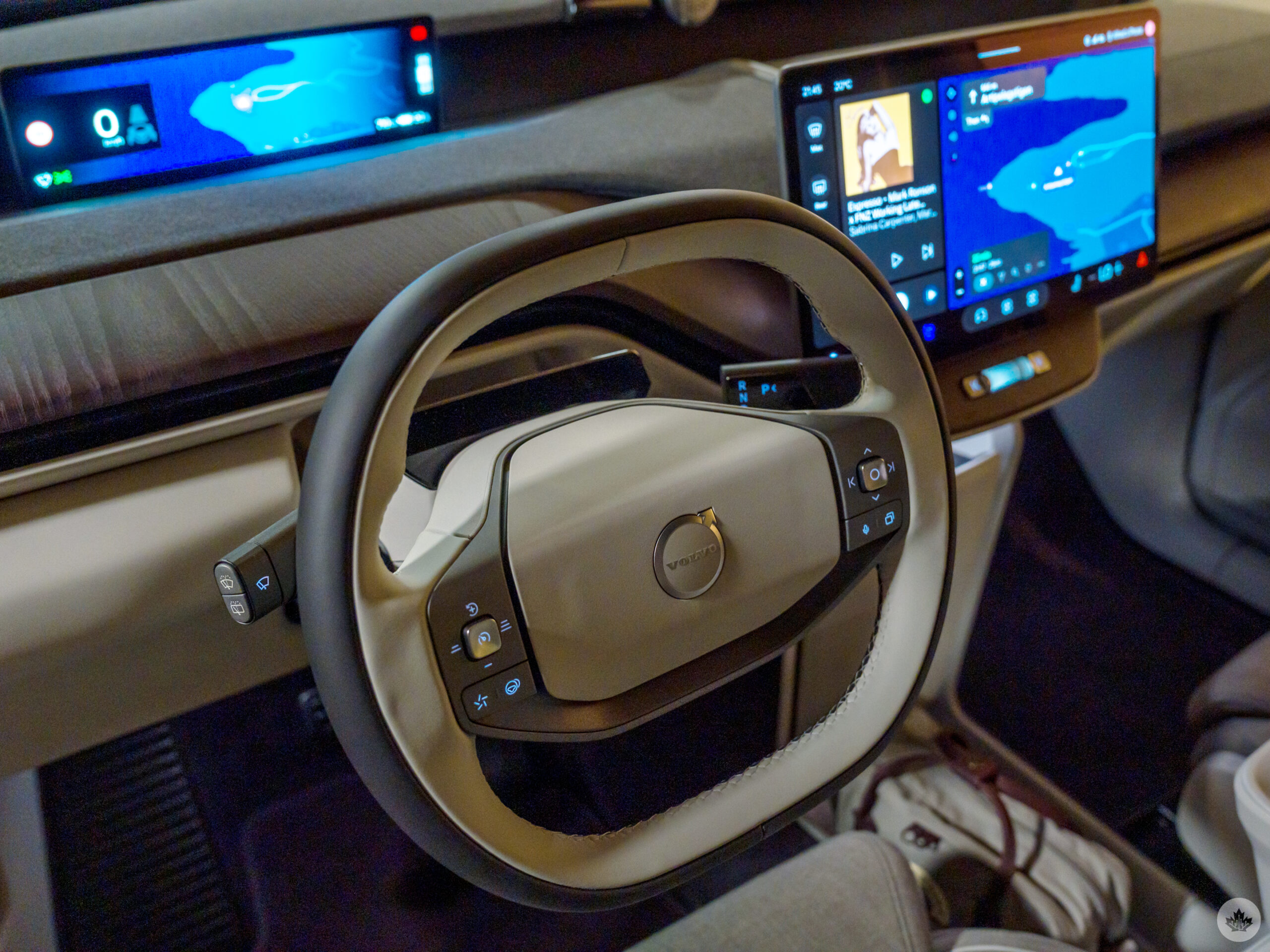
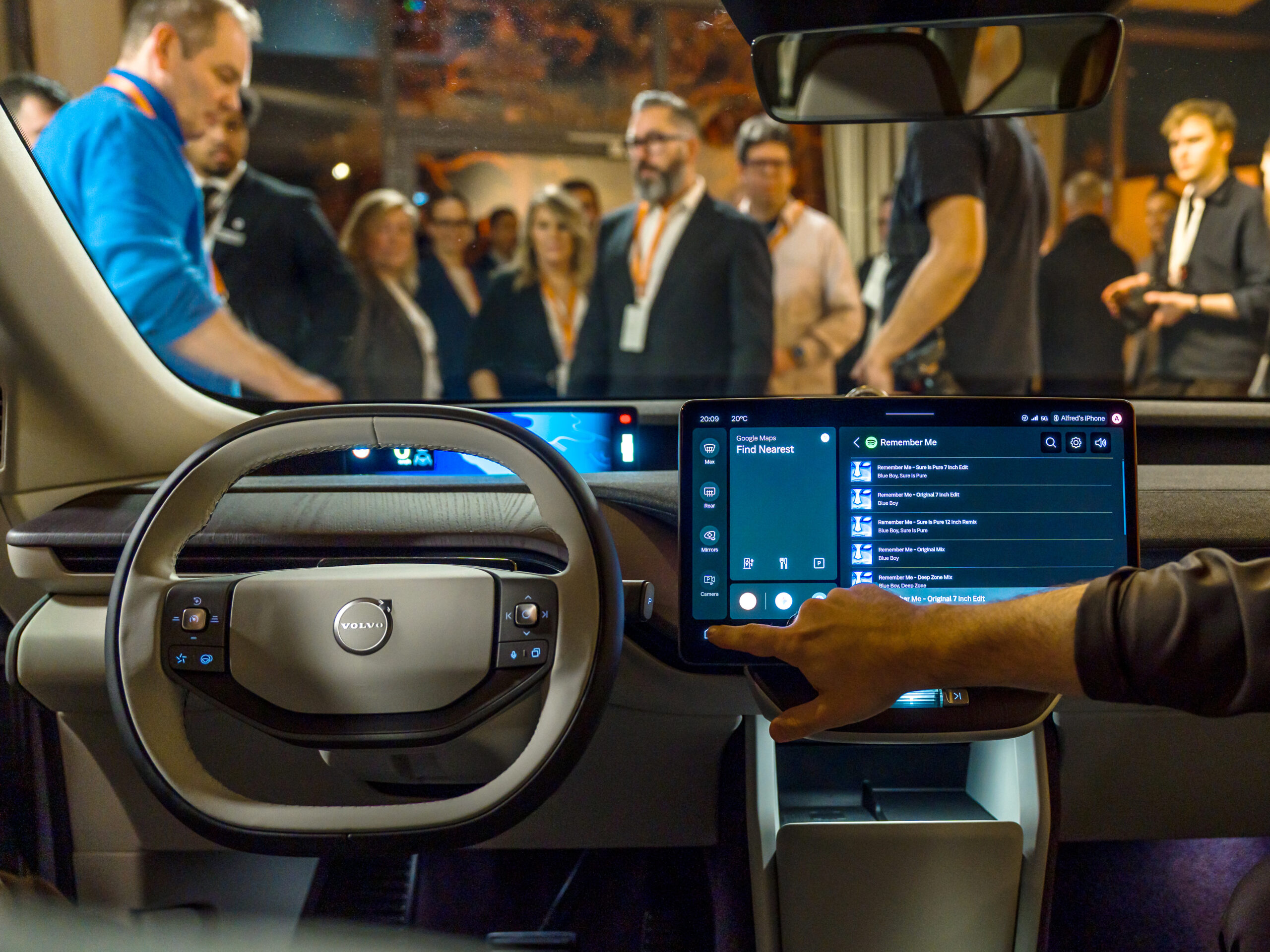
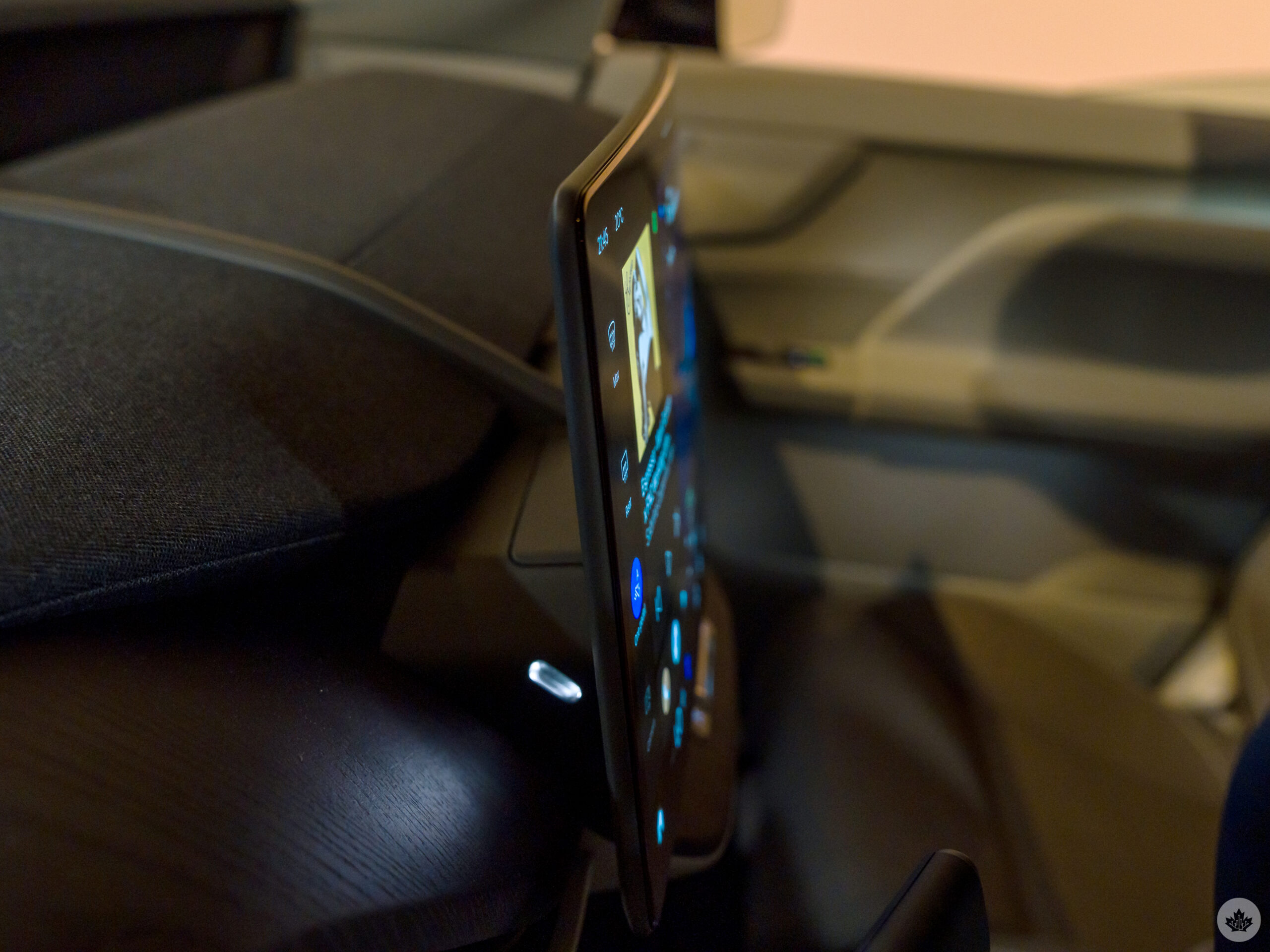
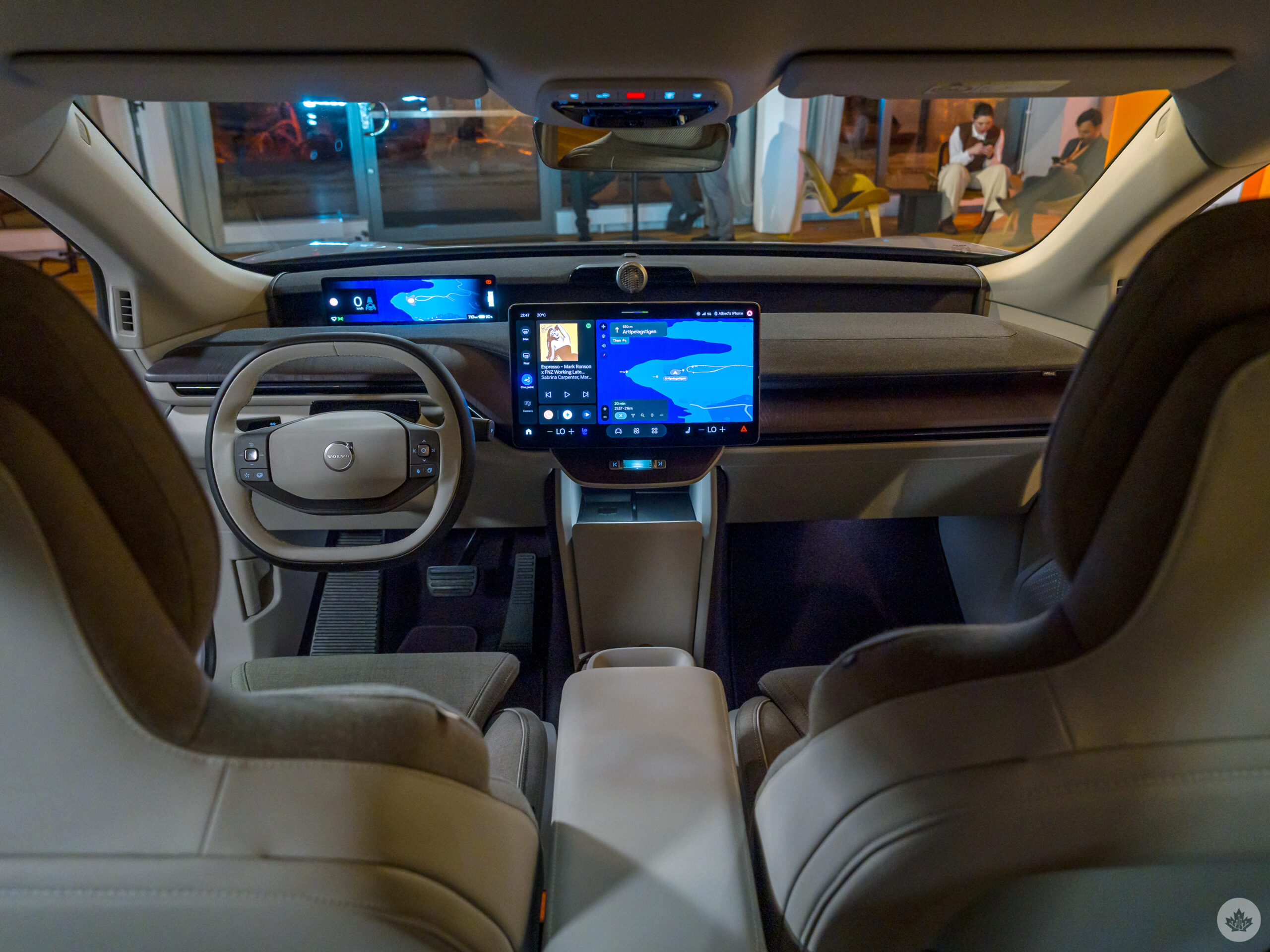
It’s hard not to notice the huge 15-inch central display inside — an OLED panel that looks sharp and vibrant, and one Volvo reps claim is glare-resistant. Given how OLED panels work in bright daylight, we’ll have to see about that on the road sometime. The other notable change is that it’s oriented in landscape and has a slight concave that curves out rather than in, like a computer monitor. The reason for that is to make the screen feel more accessible and visible to the driver and front passenger, though I’m not buying Volvo’s assertion that kids in the back will also benefit from the design when they want to watch something on it.
This marks the first time Volvo has gone with a landscape display in an EV. In an interview with MobileSyrup, Akhil Krishnan, who oversees the entire 60-product lineup (XC and EX) at Volvo, says improved multitasking and relevant details more easily appear when laid out this way, but that the company also wanted to avoid making it “look like an iPad was just planted on the dash.”
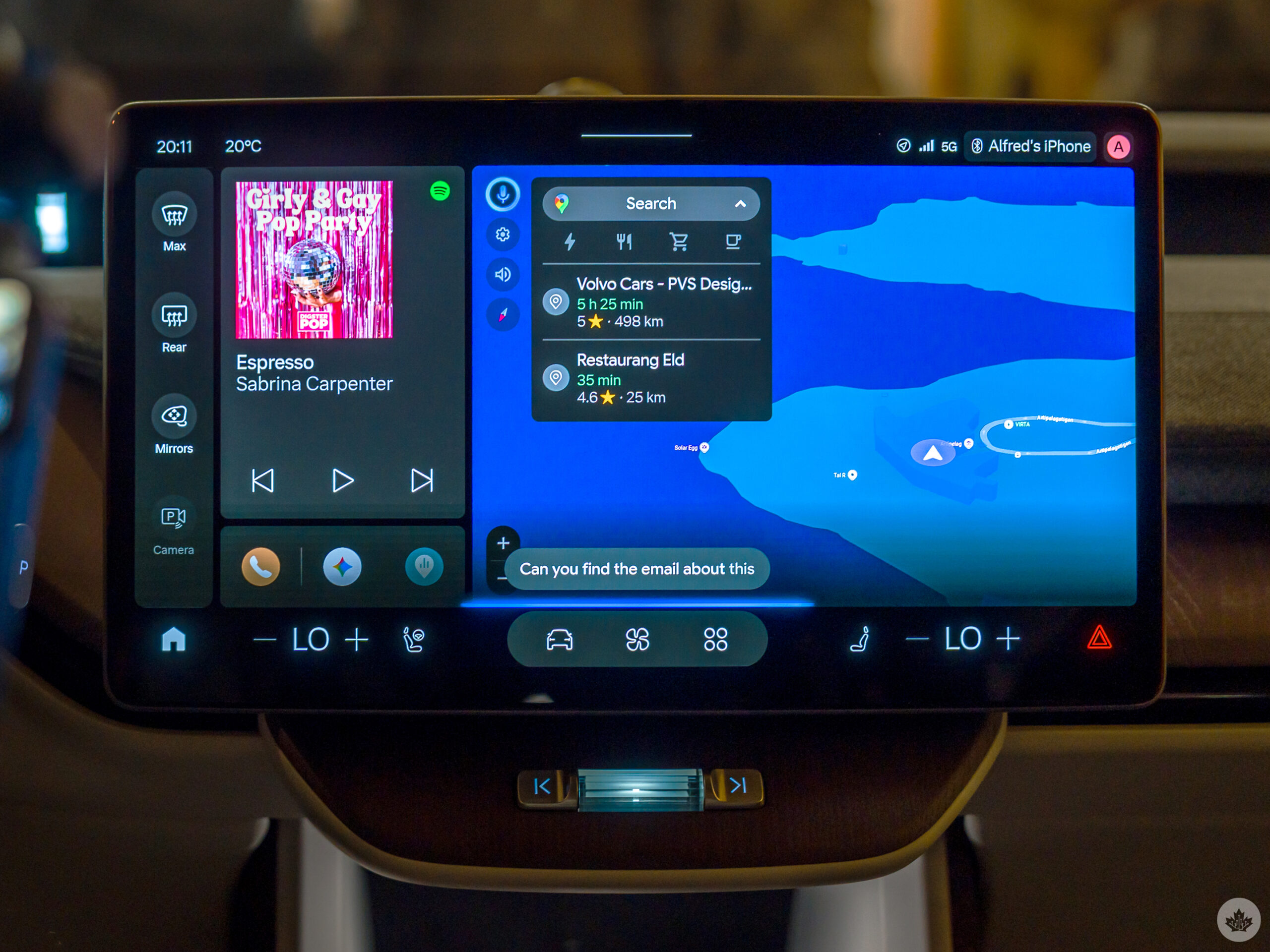
Contextual widgets pop up and adapt to driver behaviour, while Volvo is joining other automakers with a Google built-in system that already allows streaming video from apps like YouTube and Tubi (not while driving, of course).
In addition, there’s an 11.4-inch “forward driving display” —a digital cluster by another name — right in front of the driver. That’s a pretty clear departure from the EX90, which had a tiny one by comparison, as well as the EX30, which didn’t have one at all. In both cases, Volvo positioned the move as being less distracting because the HUD (heads-up display) pointed at the windshield provided necessary context for the driver.
Here, the display feels like Volvo acknowledges that it makes sense to separate core vehicle information and functions from the main infotainment screen, thereby reducing lateral eye movement. For a brand committed to safer driving, that was always a peculiar choice, but this is a step over in the other direction.
Google Gemini is the first passenger
When it comes to AI integration, there are essentially two currents at work. First, the EX60 is the initial Volvo to launch with Google Gemini integrated into the vehicle. That not only means Google Assistant is gone, it’s also going to disappear in older Volvo models. An upcoming over-the-air update will bring Gemini into approximately 2.5 million existing vehicles with native Google-based infotainment systems, going as far back as model year 2021, including those in Canada.
Anders Bell, Volvo’s chief engineering and technology officer, tells MobileSyrup that the EX60 will be the first model to launch with Gemini built-in from day one, but that the company learned lessons from earlier models to figure out deployment beyond just a single model. A dicey proposition considering hardware and processing power can differ quite a bit the more model years are separated. While that means performance and features will vary depending on processing power, memory, and sensor integration, the EX60, equipped with Nvidia Drive AGX Orin and a new Snapdragon 8255 CPU, is designed with more advanced AI-driven experiences in mind as Gemini expands its role within the vehicle.
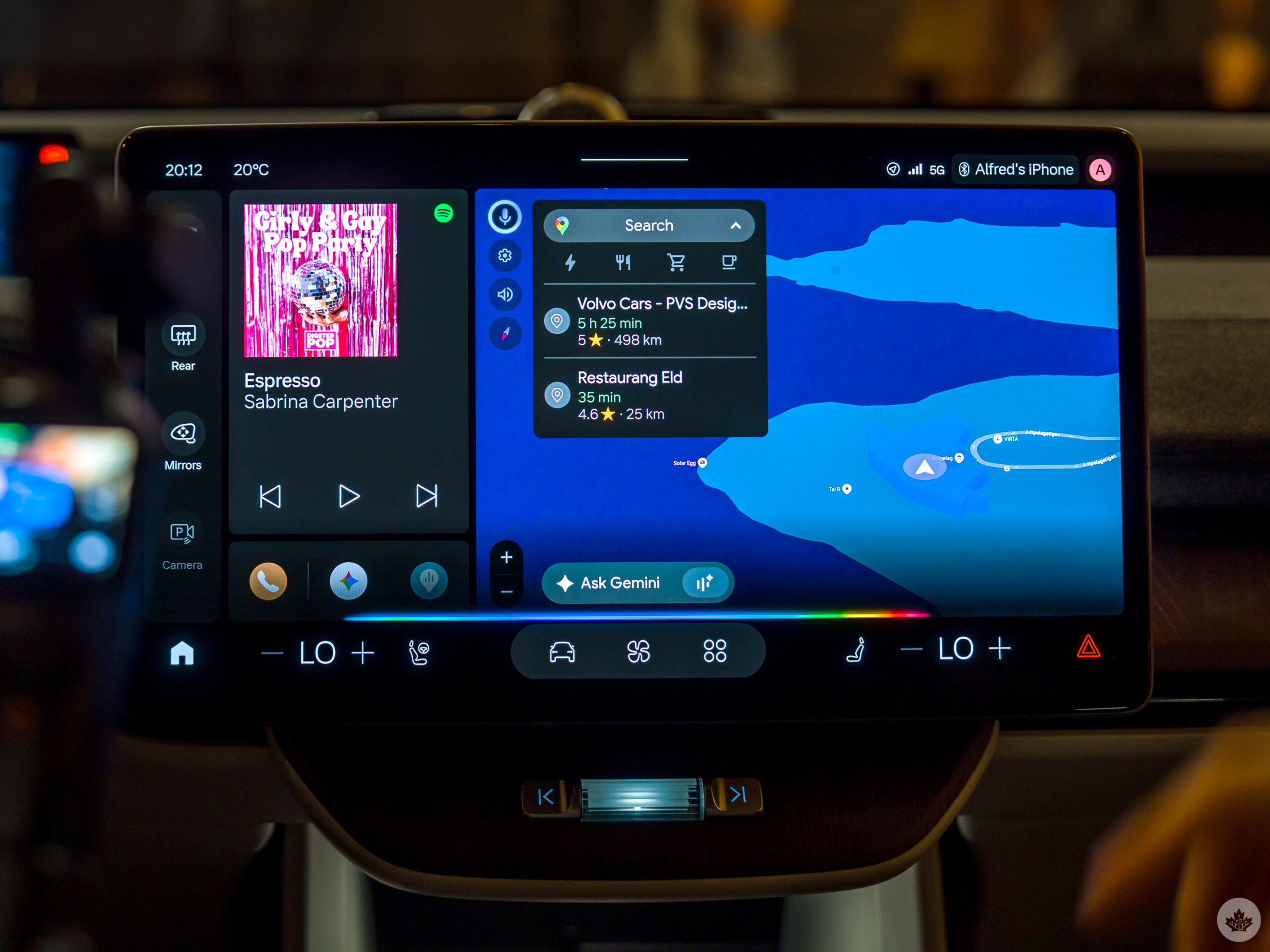
Google has been slowly (very slowly, in many ways) rolling out Gemini in Android Auto. The major difference here is that the AI will be able to manage vehicle functions, assist with navigation, handle messaging, and provide real-time information about the vehicle. For instance, it will have full access to the EX60’s HVAC and diagnostics, as well as the user manual, enabling it to answer how-to questions about features and functions inside. The plan is to give Gemini that kind of capability to the older models as well, though it’s not yet evident how far that can go given the different hardware inside. Either way, that integration won’t apply when running Gemini via Android Auto.
Digging in deeper with Google reps on hand at the launch event revealed more nuance and context. Though presented as a deeply integrated in-car AI, some of these features weren’t ready during the event and may not be ready upon vehicle availability later this year, either. And while the plan is to eventually make the platform run partly on-device, it will roll out as an entirely cloud-based system first. Embedded on-device AI, like Gemini Nano, “remains under active development”, but the balance between cloud and local processing is more of a future feature said to evolve over time.
Moreover, deeper integration, like with the vehicle’s user manual, diagnostics, camera-based contextual awareness, richer navigation and charging intelligence, also aren’t quite ready for primetime. Volvo cited an example of the EX60 passing by a landmark, where the driver asks Gemini about it, leading to a response based on data from Google Maps. While very cool, it’s something that’s still being ironed out rather than a fully formed scenario.
Despite the focus on the built-in Google system, Android Auto and CarPlay will run just fine in the EX60. Since both are also better served by landscape-oriented screens, the hardware and software combination should look and feel more natural. What’s still not clear is whether pressing the microphone button on the steering wheel brings up the voice associated with the connected platform or the built-in Gemini AI.
Big sound and independence for Apple Music
The top EX60 trim comes with a “mind-blowing” 28-speaker Bowers & Wilkins system inside. This setup embeds speakers all over the place, starting with a soundbar in the dashboard and speakers nestled into all four headrests. The mid-level trim gets a Bose system with fewer speakers. Either way, you get Dolby Atmos inside with support for spatial audio, so stream compatible tracks and movies, and you should hear the immersive sound coming from them.
Volvo is also making Apple Music a native app with Dolby Atmos, removing CarPlay from the equation. You can still use it while running CarPlay, just that it’s not necessary if you’re a subscriber. That also goes for Android users using Apple’s streaming service since you don’t have to run Android Auto to gain access to that, either. Just log into your account from the screen, and you’re good to go, much like Porsche introduced in the Taycan back in 2019. Rather than force drivers to pick one platform or another, the EX60 will play nice in both ways.
Availability begins Spring 2026
Alongside the vehicle itself, Volvo is rethinking the customer experience in Canada. It will be piloting a bundled leasing model called “Care” in Sweden that combines the vehicle, auto insurance, home charging and electricity into a single monthly payment. It’s not clear how long the pilot will last before the company decides to roll it out to other markets, but Canada is among those it has in mind.
Krishnan says a 36-month lease is the most popular for Canadians who want to drive a Volvo, and that the pilot is one way in which it’s exploring vehicle ownership alternatives. He confirmed that its ill-fated subscription service won’t be making a comeback. In addition, 24- and 48-month leases are also on the table as options.
The P10 AWD will be available for pre-order now with production beginning in spring 2026 and deliveries expected in the summer and fall. The P12 AWD will follow at a later undetermined timeframe. Pricing starts at C$77,500. A Cross Country version will launch first in Europe, followed by North America starting in mid-2027.
MobileSyrup may earn a commission from purchases made via our links, which helps fund the journalism we provide free on our website. These links do not influence our editorial content. Support us here.